
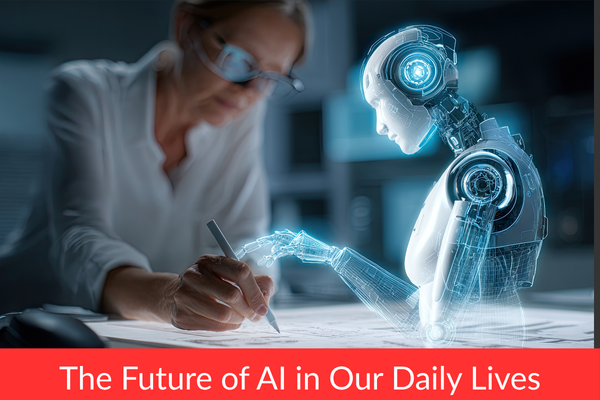
The Future of AI is not just a trending topic—it is a revolution shaping our world. From self-driving cars to healthcare robots and smart assistants, artificial intelligence is everywhere. But like every powerful technology, AI brings both positive opportunities and negative risks. In this article, we will explore how the Future of AI is changing industries, jobs, and human life.
1.The Future of AI in Healthcare

The AI in healthcare looks very promising. AI-powered tools can detect diseases faster than doctors, analyze X-rays, and even suggest treatments. For example, cancer detection using AI has shown accuracy levels higher than human experts. This positive change can save millions of lives.
However, the negative side is the over-reliance on machines. If AI makes a mistake, it could affect human health directly.
- Detect diseases earlier with advanced scans
- Suggest treatments using patient history
- Reduce human errors in diagnosis
- Speed up medicine development
- 👉 Positive: Saves millions of lives
- 👉 Negative: Machine errors could harm patients
2.The Future of AI in Education
Education is another area where the AI Future is reshaping learning. Smart learning apps, AI tutors, and personalized study plans make education more interactive and powerful. Students in rural areas now have access to quality resources through AI.
But on the flip side, too much dependence on AI in education may reduce human creativity and critical thinking. Teachers must use AI as a tool, not a replacement.
3.The Future of AI in Business & Economy
Businesses are experiencing a revolution with the AI Future. AI chatbots provide 24/7 customer support, algorithms analyze customer behavior, and AI tools boost digital marketing. The positive impact is clear: cost savings and better services.
Yet, the negative side is job loss. Many routine jobs are being replaced by automation. This creates fear about unemployment in the near future.

4.The Future of AI in Transportation
The Future of AI in transportation includes self-driving cars, drones, and smart traffic systems. These innovations promise fewer accidents, reduced pollution, and faster deliveries. Imagine a world where you can relax while your car drives itself safely!
Still, there are dangers. A single AI error in self-driving systems could lead to accidents. Governments and companies must build strict safety measures before full adoption.
5.The Future of AI in Daily Life
From Alexa and Siri to Netflix recommendations, the Future of AI has already entered our homes. Smart assistants remind us of tasks, smart homes save energy, and AI shopping assistants suggest products. This makes our life easier and more productive.
The risk, however, lies in privacy. AI collects personal data every day, and if misused, it can harm our freedom and security.
6.The Future of AI and Human Jobs
The AI future will definitely affect jobs worldwide. While some jobs will disappear, new jobs will also emerge. AI engineers, data scientists, and AI ethicists are in high demand. The key is reskilling and adapting.
The negative side is that many people may struggle to adapt, creating a gap between AI-skilled workers and others.
- Jobs disappearing: Data entry, routine office work
- Jobs growing: AI engineers, data scientists, AI ethicists
- Skills needed: Coding, AI ethics, data analysis
- 👉 Positive: New opportunities in advanced fields
- 👉 Negative: Workers may struggle to adapt
Conclusion: The Balanced AI Future
The ai is both inspiring and challenging. It offers powerful solutions in healthcare, education, business, and transportation. At the same time, it brings risks like job loss, privacy threats, and over-dependence on machines.
The world must embrace the Future of AI carefully, with proper ethics, laws, and human involvement. If balanced correctly, AI will not replace us—it will empower us.
1 thought on “The Future of AI in Our Daily Lives”