
Blood Moon Eclipse 2026 happens on March 3. Discover exact UTC times, global visibility, viewing tips, and the powerful science behind this total lunar eclipse.
The Blood Moon Eclipse 2026 is set to become one of the most breathtaking sky events of the decade. On March 3, 2026, the Moon will transform into a deep copper-red sphere during a total lunar eclipse visible across large parts of the world.
There’s something primal about a Blood Moon. You step outside, glance upward, and that familiar white lantern has turned crimson. Your brain understands the science — but your instincts feel the drama.
Whether you’re an experienced skywatcher or simply curious about what’s happening overhead, this complete guide will help you prepare, understand, and fully experience the Blood Moon Eclipse 2026.
Table of Contents
What Is the Blood Moon Eclipse 2026?
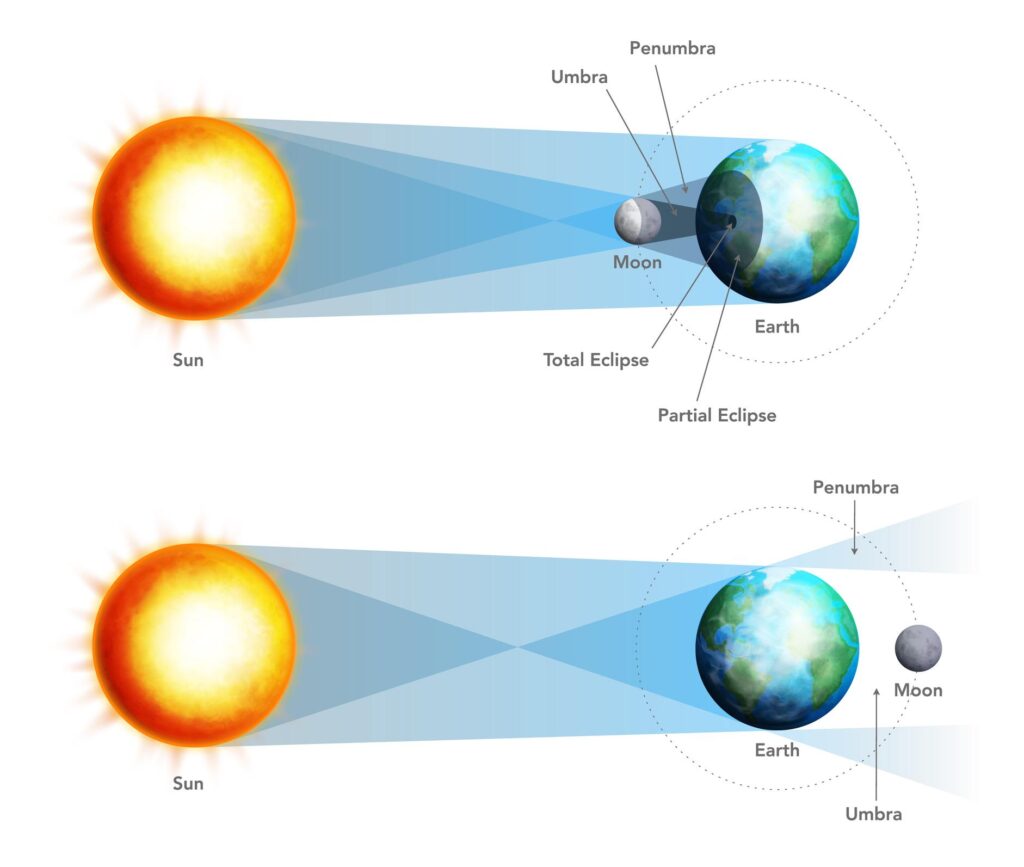
The Blood Moon Eclipse 2026 refers to a total lunar eclipse occurring on March 3, 2026, when Earth moves directly between the Sun and the Moon.
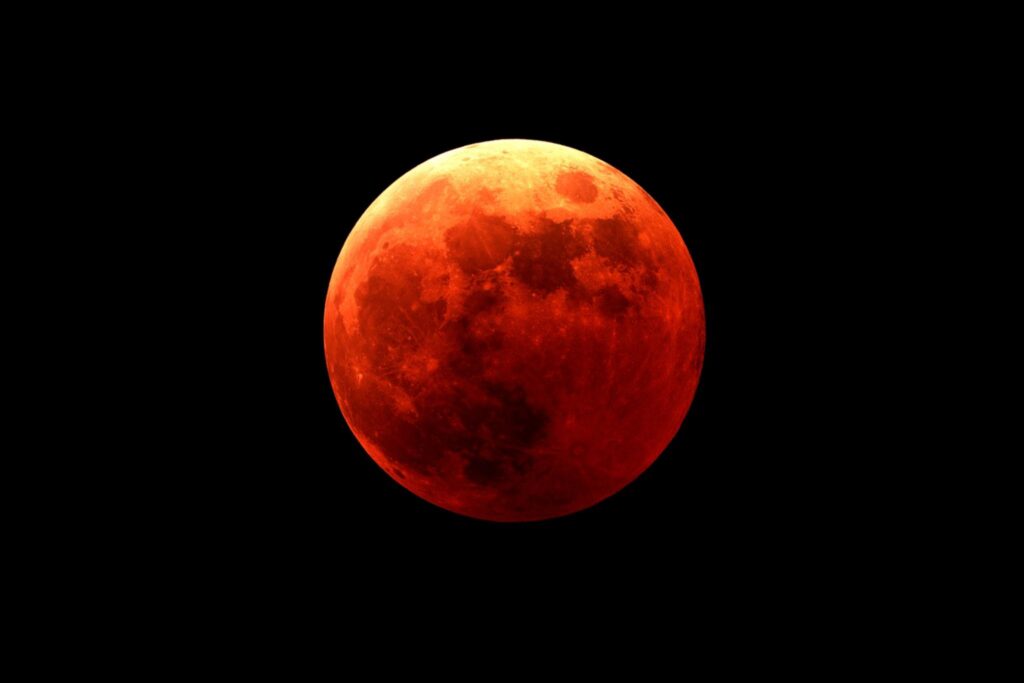
During totality, Earth’s shadow fully covers the Moon. Instead of disappearing, the Moon glows red due to sunlight bending through Earth’s atmosphere.
Astronomers classify this event as a total lunar eclipse, meaning the Moon passes entirely through Earth’s umbra (the darkest part of the shadow).
For detailed eclipse science, you can explore resources from NASA (DoFollow).
When Is the Blood Moon Eclipse 2026? (UTC Schedule)
The Blood Moon Eclipse 2026 occurs on:
📅 March 3, 2026
🌍 Worldwide Event
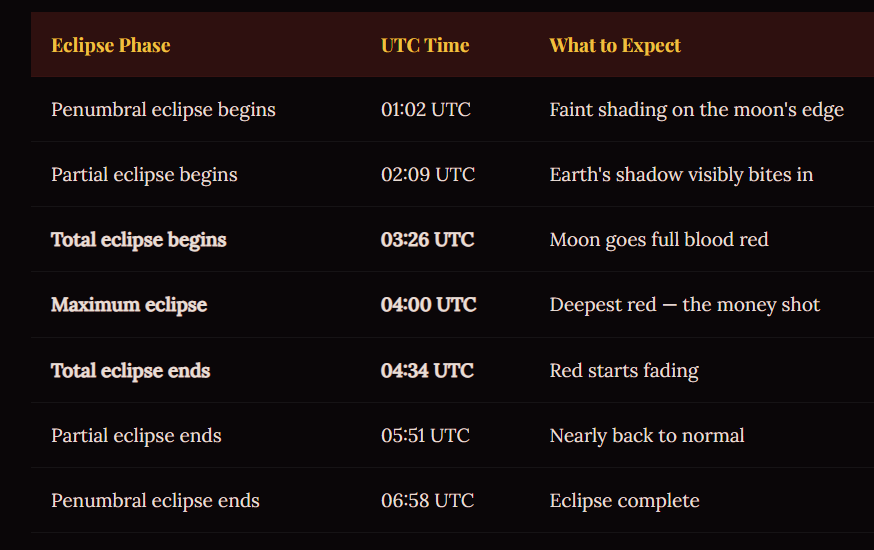
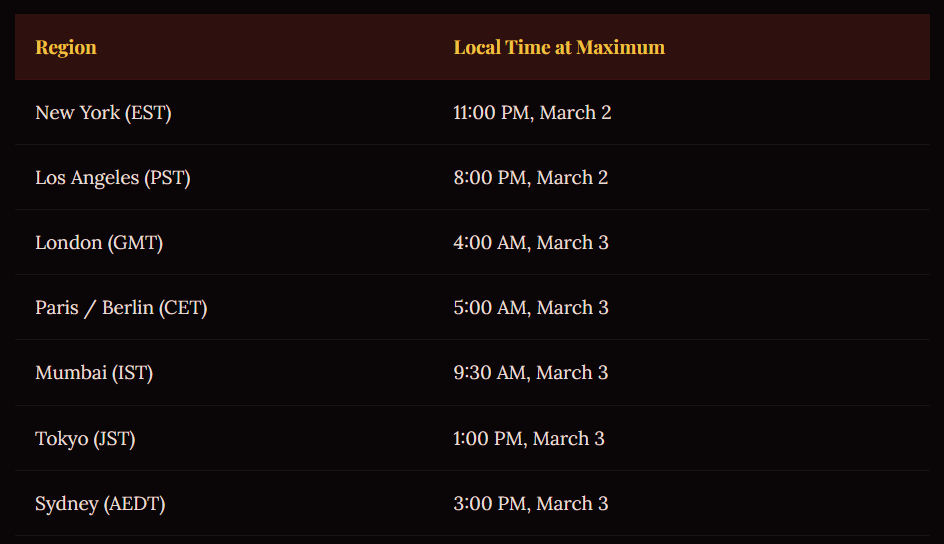
All times below are in UTC (Coordinated Universal Time).
Blood Moon Eclipse 2026 Visibility Map (Worldwide):-
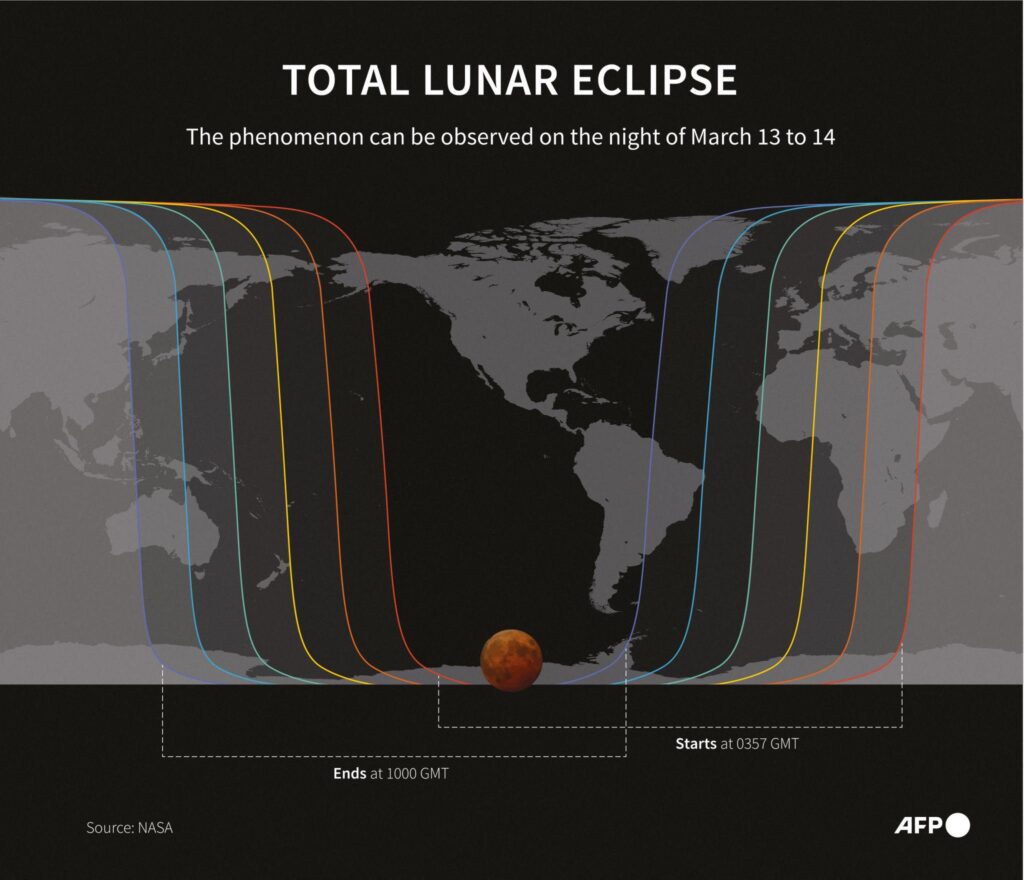
The good news? The Blood Moon Eclipse 2026 is visible from a significant portion of the planet.
In different countries visibility –
🌎 North America And South America-

Excellent visibility across eastern and central regions. West Coast viewers will see it during moonrise.
Nearly full visibility, with ideal conditions in Brazil and Argentina.
🌍 EuropeAnd Africa
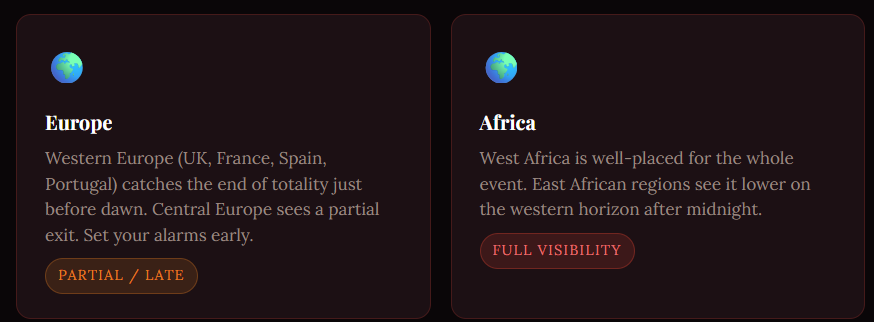
Western Europe catches the later stages before dawn. Early risers are rewarded.
West Africa experiences prime viewing. Eastern regions see it lower on the horizon.
🌏 Asia And Australia
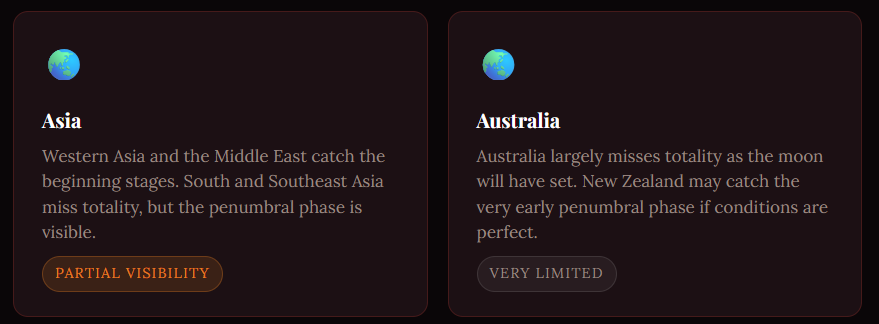
Western Asia and the Middle East catch early phases. Totality is limited in Southeast Asia.
Most of Australia misses totality due to moonset timing.
If you’re outside prime zones, live broadcasts from Virtual Telescope Project often provide excellent coverage (DoFollow).
How to Watch the Red Moon Eclipse 2026
One of the best parts of the Blood or red Moon Eclipse 2026? No special gear required.
👁 Naked Eye
Completely safe. No filters needed. Unlike solar eclipses, lunar eclipses are harmless to view.
🔭 Binoculars
7×50 binoculars enhance surface details and color depth dramatically.
🔭 Telescope
Low magnification (around 30–50x) keeps the entire Moon in frame while revealing craters glowing against crimson.
📷 Photography Tips
- Tripod required
- ISO 800–3200
- Exposure: 1–4 seconds during totality
- Shoot in RAW format
For eclipse photography guidance, consult Sky & Telescope (DoFollow).
Why Does the Moon Turn Red During This Time
Here’s the science behind the drama.
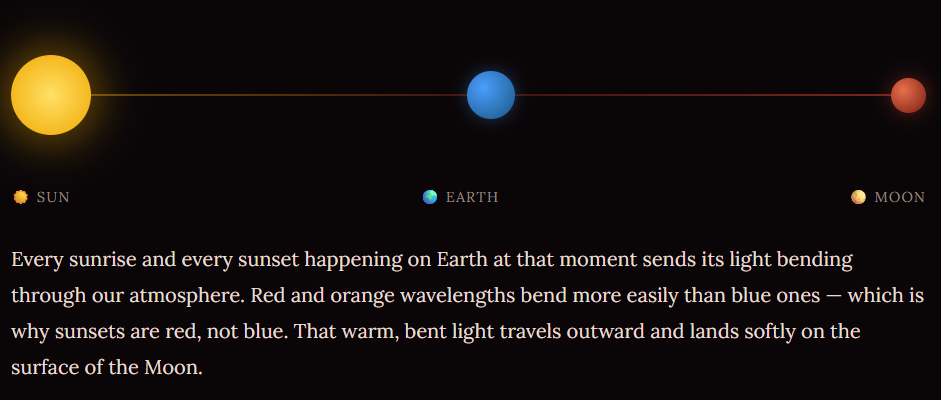
When Earth blocks direct sunlight, some sunlight bends through our atmosphere before reaching the Moon. Blue light scatters; red light passes through.
This is the same reason sunsets glow red.
So during the Red Moon Eclipse 2026, the Moon reflects the combined light of every sunrise and sunset happening on Earth at that moment.
If you stood on the Moon, you’d see Earth ringed with fiery light — an extraordinary sight.
Cultural & Spiritual Meaning of the Blood Or Red Moon Eclipse 2026
Long before astronomy explained eclipses, civilizations interpreted them symbolically.
Indigenous American Traditions
Viewed as a healing period — communities sang or prayed for the Moon’s recovery.
Chinese Tradition
Believed a celestial dragon devoured the Moon.
Jewish Tradition
The Talmud references lunar eclipses as omens tied to collective reflection.
Islamic Tradition
Some one belive that Special prayers known as Salat al-Khusuf are performed.But Isl;am Dont consider like thing He belive that Only one God who is universal and Will Always A thing a right time at nature.For more Detail pleas read..this post
Modern Astrology
Often associated with culmination, release, and transformation.
Whether scientific or symbolic, the Blood Moon Eclipse 2026 invites reflection.
Practical Preparation Tips for the Blood Moon Eclipse 2026
📅 Set two alarms — 90 minutes before totality and 15 minutes before maximum.
🌑 Allow 15–20 minutes for your eyes to adjust.
🧥 Dress warmly — March nights are cold in many regions.
🚗 Be willing to drive away from city lights.
📱 Monitor cloud forecasts using reliable weather services.
👥 Share the moment. Text a friend. Step outside together.
Final Thoughts: Don’t Miss the Blood Moon Eclipse 2026
The Blood Moon Eclipse 2026 is more than an astronomical alignment. It’s a reminder that we live on a moving planet in a precise cosmic dance.
For just over an hour, the Moon will glow red — a rare, haunting, and unforgettable sight.
It doesn’t require belief.
It doesn’t require equipment.
It simply requires you to look up.
Mark March 3, 2026 on your calendar now.
The sky is preparing something extraordinary. 🌕
❓ Frequently Asked Questions (FAQ)
When is the Blood Moon Eclipse 2026?
The Blood Moon Eclipse 2026 occurs on March 3, 2026. The maximum eclipse happens at 04:00 UTC, when the Moon reaches its deepest red color. Local times vary depending on your region, so convert 04:00 UTC to your time zone for the exact peak viewing moment.
Where will the Blood Moon Eclipse 2026 be visible?
The Blood Moon Eclipse 2026 will be visible across North America, South America, parts of Europe, West Africa, and portions of Asia. North and South America will experience the best full totality viewing conditions, while parts of Europe will see the eclipse just before dawn.
Why does the Moon turn red during a total lunar eclipse?
During a total lunar eclipse, Earth moves directly between the Sun and the Moon. Sunlight passes through Earth’s atmosphere, filtering out blue light and bending red light toward the Moon. This scattered red light gives the Moon its dramatic “blood” color.
Is it safe to look at the Blood Moon Eclipse 2026?
Yes, it is completely safe to view the Blood Moon Eclipse 2026 with the naked eye. Unlike a solar eclipse, a lunar eclipse does not require protective glasses or filters. You can safely watch it without any special equipment.
How long will the Blood Moon Eclipse 2026 last?
The total lunar eclipse will last nearly 6 hours from start to finish, with totality (the full red phase) lasting just over one hour. The most dramatic moment occurs at 04:00 UTC during maximum eclipse.